

Track Star
Manhattan, NY
AP-TS-2026
Story
Design notes
Track Star started as a New York street-corner quiz — name the artist, win five bucks — and grew into one of the internet's most loved music shows. Their long-form podcast brought the conversations indoors: deep dives on music with guests like Questlove and Ron Carter, taped in their Manhattan office. The format leans on the system: a song plays in the room, then the conversation digs into it. That's what ”reference” means here — when the playback is clear enough, guests stop talking about songs from memory and start reacting to what they're actually hearing: a hi-hat pattern, a bass line's placement, an arrangement choice buried in the mix. The system's job is to surface those details.
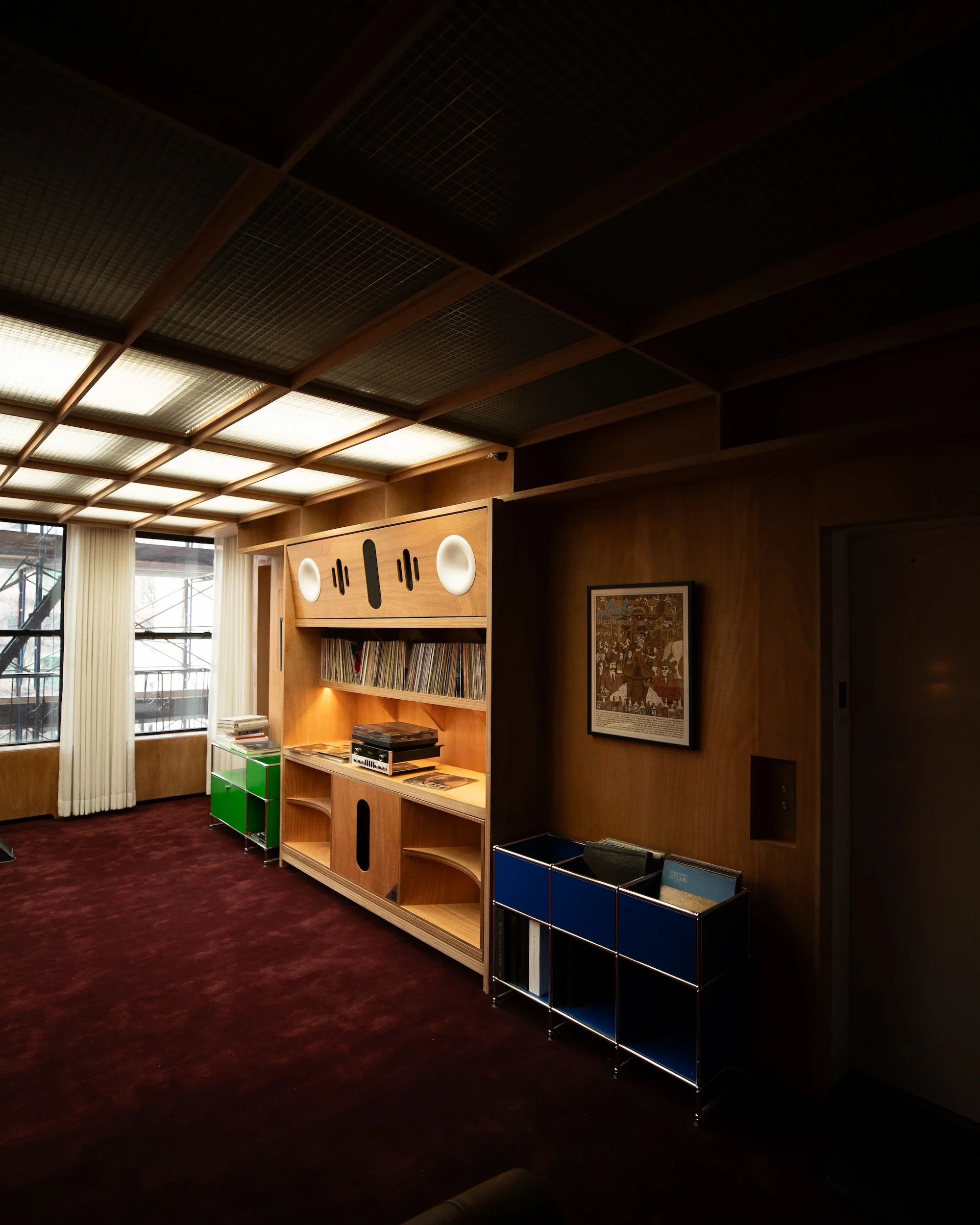
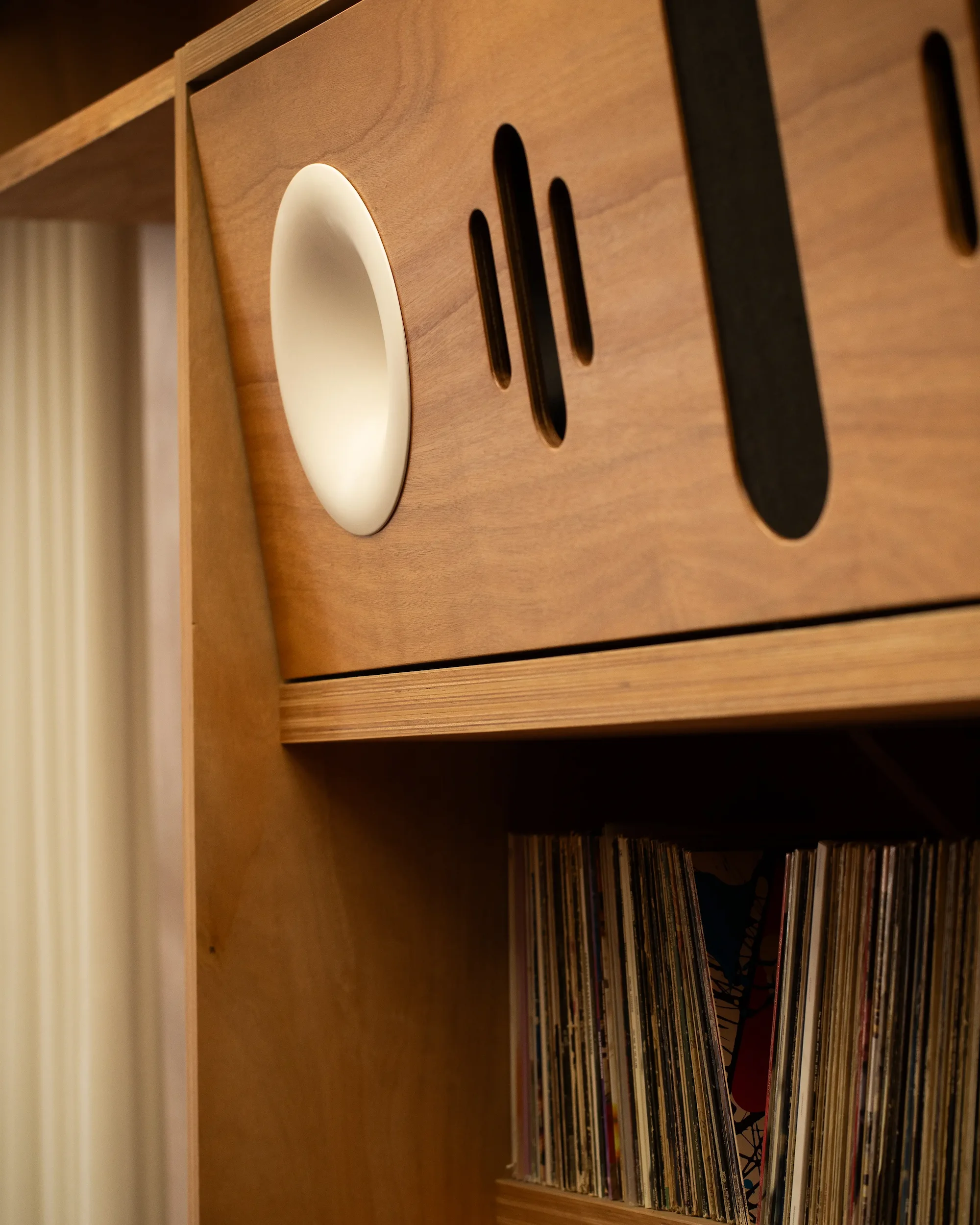
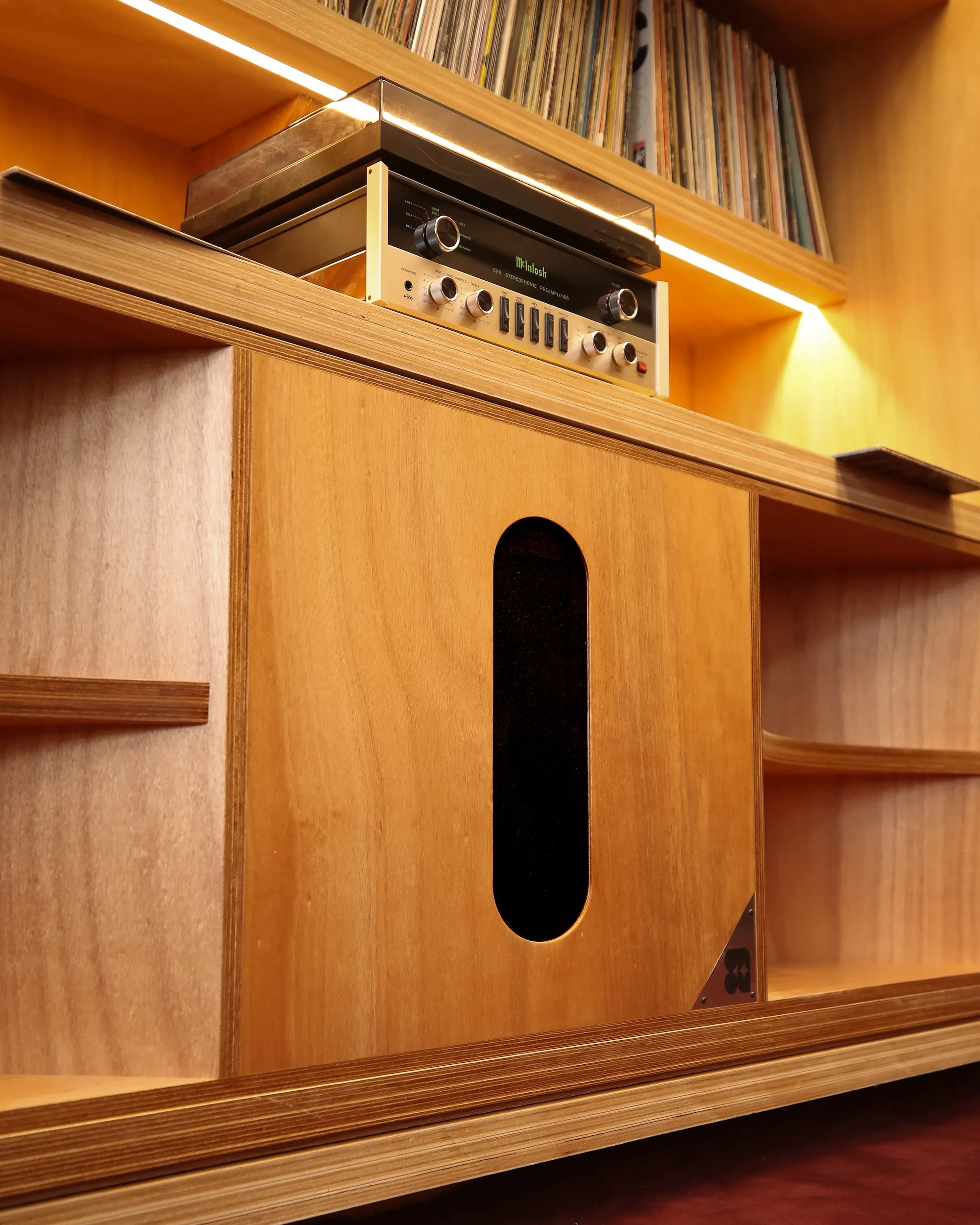
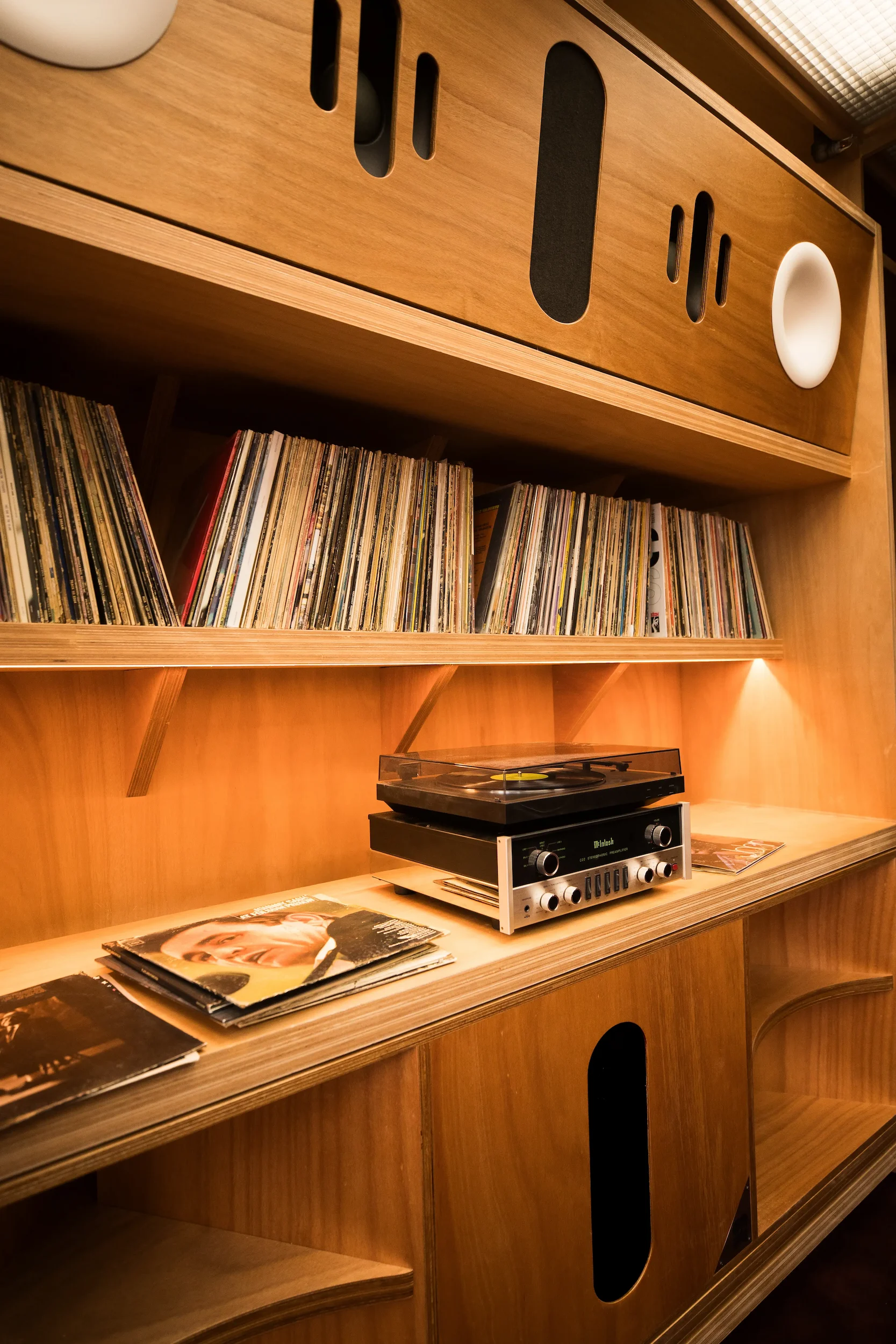
Ideas of Order, the Chinatown architecture studio, designed the space; we designed the hardware to fill it. The process ran through 3D files. Ideas of Order sent renders of the room with the millwork already composed — the speakers weren't going to shape the furniture; the furniture would shape the speakers. Countless model revisions went back and forth refining the design, with the millwork's dimensions as hard constraints: the full-range top sections and the 21” folded subwoofer beneath had to be modelled, simulated, and tuned around the exact volumes they were going into. Enclosure alignments, horn paths, driver placement — all solved inside dimensions fixed before a single driver was chosen.
Track Star
Manhattan, NY
AP-TS-2026
Story
Design notes
Track Star started as a New York street-corner quiz — name the artist, win five bucks — and grew into one of the internet's most loved music shows. Their long-form podcast brought the conversations indoors: deep dives on music with guests like Questlove and Ron Carter, taped in their Manhattan office. The format leans on the system: a song plays in the room, then the conversation digs into it. That's what ”reference” means here — when the playback is clear enough, guests stop talking about songs from memory and start reacting to what they're actually hearing: a hi-hat pattern, a bass line's placement, an arrangement choice buried in the mix. The system's job is to surface those details.
Ideas of Order, the Chinatown architecture studio, designed the space; we designed the hardware to fill it. The process ran through 3D files. Ideas of Order sent renders of the room with the millwork already composed — the speakers weren't going to shape the furniture; the furniture would shape the speakers. Countless model revisions went back and forth refining the design, with the millwork's dimensions as hard constraints: the full-range top sections and the 21” folded subwoofer beneath had to be modelled, simulated, and tuned around the exact volumes they were going into. Enclosure alignments, horn paths, driver placement — all solved inside dimensions fixed before a single driver was chosen.
Track Star
Manhattan, NY
AP-TS-2026
Story
Design notes
Track Star started as a New York street-corner quiz — name the artist, win five bucks — and grew into one of the internet's most loved music shows. Their long-form podcast brought the conversations indoors: deep dives on music with guests like Questlove and Ron Carter, taped in their Manhattan office. The format leans on the system: a song plays in the room, then the conversation digs into it. That's what ”reference” means here — when the playback is clear enough, guests stop talking about songs from memory and start reacting to what they're actually hearing: a hi-hat pattern, a bass line's placement, an arrangement choice buried in the mix. The system's job is to surface those details.
Ideas of Order, the Chinatown architecture studio, designed the space; we designed the hardware to fill it. The process ran through 3D files. Ideas of Order sent renders of the room with the millwork already composed — the speakers weren't going to shape the furniture; the furniture would shape the speakers. Countless model revisions went back and forth refining the design, with the millwork's dimensions as hard constraints: the full-range top sections and the 21” folded subwoofer beneath had to be modelled, simulated, and tuned around the exact volumes they were going into. Enclosure alignments, horn paths, driver placement — all solved inside dimensions fixed before a single driver was chosen.